Last reviewed: November 2026. If you sell to stores or restaurants, food safety rules such as the FSMA Produce Safety Rule may apply. Check with your state agriculture department.
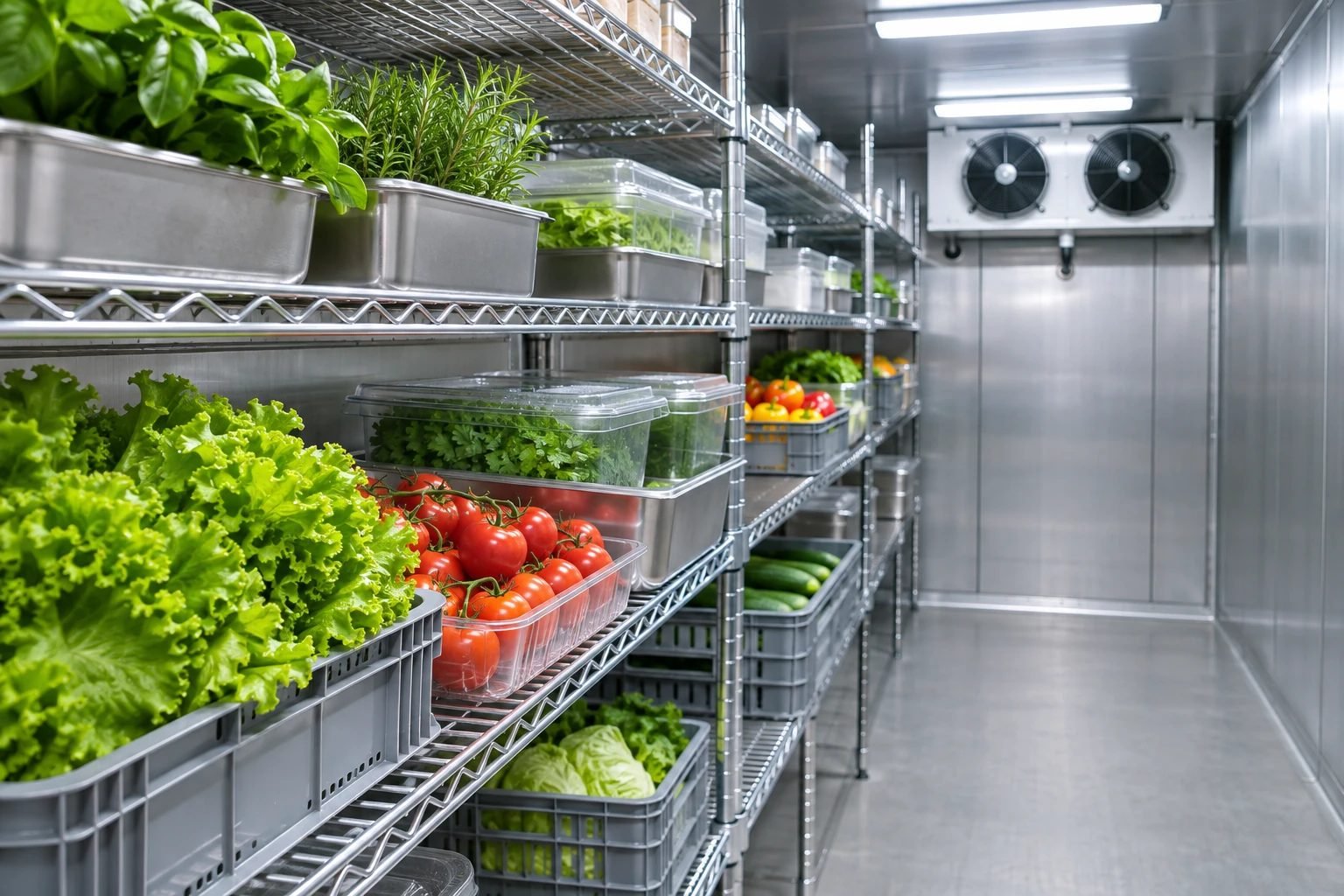
For a farm, cooling is where quality is won or lost. Removing field heat quickly after harvest slows respiration and water loss and extends storage life.
Why cold storage matters on a farm
- Slows respiration and wilting
- Lets you harvest ahead for markets and deliveries
- Reduces waste
- Helps meet buyers’ quality and food-safety expectations
Options
| Option | Notes |
|---|---|
| Standard panel walk-in | Most reliable; commercial refrigeration; higher cost |
| Refrigerated shipping container | Durable, movable; good for outdoor sites |
| Insulated room with an air conditioner and a controller | A low-cost approach for small growers (for example, a CoolBot controller with a window air conditioner). Johnny’s Selected Seeds notes limited performance below 36°F and a practical floor of about 33°F; it cannot run as a freezer |
The DIY approach can work for small farms, but it is not a substitute for commercial equipment in a licensed food business. Check with buyers and inspectors.
Temperature and humidity
- Many leafy greens, roots and brassicas keep best near 32–36°F with high humidity. Exact settings differ by crop and purpose, so check each one in USDA Agriculture Handbook 66.
- Tomatoes, basil, cucumbers, squash and many warm-season crops are chill-sensitive and need warmer storage.
- Ethylene-producing fruit (such as apples and ripe bananas) can shorten the life of greens and flowers stored nearby.
See the Temperature Guide and USDA’s storage references.
Practical tips
- Pre-cool produce with cold water or hydro-cooling where appropriate, before it goes into the walk-in
- Size for your peak harvest, not the average week
- Use food-safe, washable bins and shelving
- Keep the floor clean and drained; avoid standing water
- Ask about USDA’s Farm Storage Facility Loans, which can finance walk-in coolers for producers’ own crops (up to $500,000 per loan, at least 15% down)
Related: Walk-Ins for Grocery and Produce and Florists.
Sources
- USDA Agriculture Handbook 66: The Commercial Storage of Fruits, Vegetables, and Florist and Nursery Stocks
- FDA: FSMA Produce Safety Rule
- Utah State Extension: Postharvest handling (USDA Handbook 66 data)
- FAO: Recommended storage temperatures and humidity for produce
- University of Georgia: Produce storage and compatibility
- Johnny’s Selected Seeds: CoolBot limitations (PDF)
- University of Minnesota Extension: CoolBot walk-in coolers
- USDA FSA: Farm Storage Facility Loans fact sheet