Last reviewed: November 2026.
The door is the hardest-working part of a walk-in and the source of many of its problems: frost, high energy bills and warm product. Knowing the parts helps you specify the right door and spot trouble early.
The parts of a walk-in door
- Door leaf: an insulated panel, typically the same foam and thickness as the walls.
- Frame: the opening built into the wall panel. On freezers it contains a heater wire to stop the gasket freezing to the frame.
- Gaskets: flexible magnetic seals around the top and sides, plus a sweep at the bottom.
- Hinges: usually spring-loaded or cam-lift hinges that help close the door.
- Closer: pulls the door shut. Federal rules require walk-in doors to close automatically.
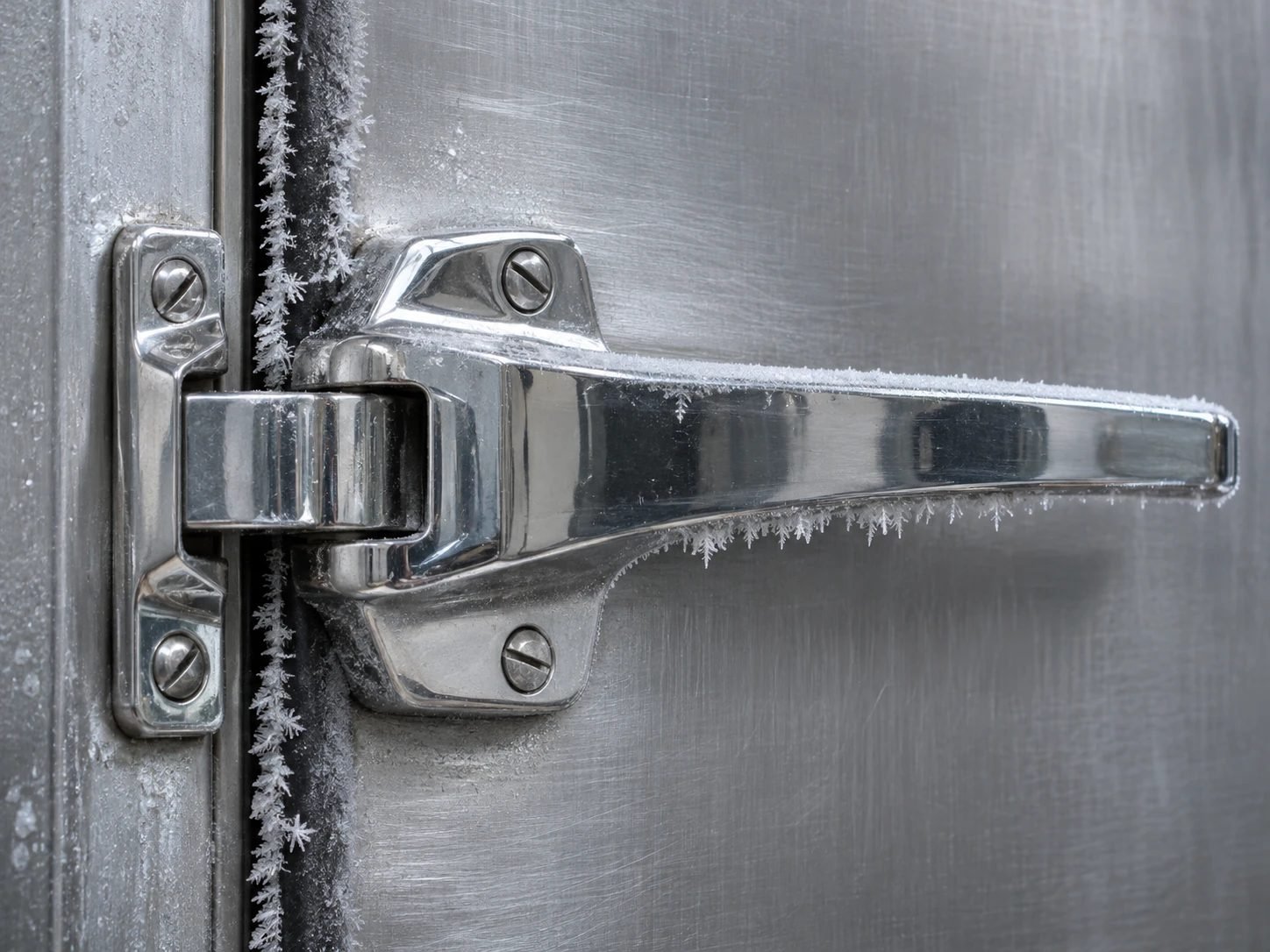
- Latch and inside release: lets anyone inside open the door, even if it is locked from outside.
- Kick plate: protects the bottom of the door from carts and boots.
What federal rules require
DOE standards in 10 CFR 431.306 require walk-ins to have automatic door closers that firmly close doors that are within one inch of full closure (the rule does not apply to doors wider than 3 feet 9 inches or taller than 7 feet), and strip doors, spring-hinged doors or another method of reducing infiltration when the door is open. Doors must also meet minimum insulation values, and DOE sets energy limits for doors by class.
Options worth considering
| Option | Why |
|---|---|
| Strip curtain | Cuts warm air coming in while the door is open for deliveries |
| Hold-open hinge or kickstand | For loading, but it must not defeat the closer during normal use |
| View window | Lets staff check inside before opening. Heated glass on freezers |
| Wider door | For carts, racks and pallet jacks |
| Diamond-plate kick plate | Protects against cart damage |
| Door alarm | Alerts staff if the door stays open too long |
| Glass display doors | For grocery, convenience stores and beer caves where customers reach in |
Common door problems
- Frost around the frame: a torn gasket, a sagging door or a failed frame heater.
- Door won’t close on its own: a weak closer, worn hinges or a door that has dropped out of alignment.
- Door freezes shut (freezers): usually a frame heater failure.
- Hard to open after closing (freezers): the pressure relief port is blocked or iced.
Gaskets, closers and heaters can usually be replaced without replacing the door. See How to Replace a Walk-In Door Gasket and Why Your Walk-In Is Icing Up.